2026/06/18 23:43 WORLD
Small-Farm Operators Are Rethinking the Daily Feeding Routine
Small-Farm Operators Are Rethinking the Daily Feeding Routine — and the Numbers Explain Why
A growing segment of backyard poultry keepers is moving away from manual feeding schedules as labor pressure on family farms continues to mount
SEATTLE, WA — June 18, 2026 — Across rural and semi-rural communities in North America, a quiet shift is happening inside the chicken coop. Family farm operators who once organized their mornings around feeding schedules are increasingly asking a different question: does this task actually need a person present every day?
The answer, for a fast-growing group of small-flock owners, is no.
A Routine That Nobody Talks About — Until It Becomes a Problem
Managing a backyard flock of 10 chickens sounds simple on paper. In practice, it means showing up at the coop at least twice a day, 365 days a year. That is upward of 700 individual feeding trips annually — before accounting for spillage cleanup, pest intrusion, or the reality that bad weather does not pause the schedule.
For farmers juggling off-farm employment, family responsibilities, or seasonal workloads, the cumulative weight of that routine is not trivial.
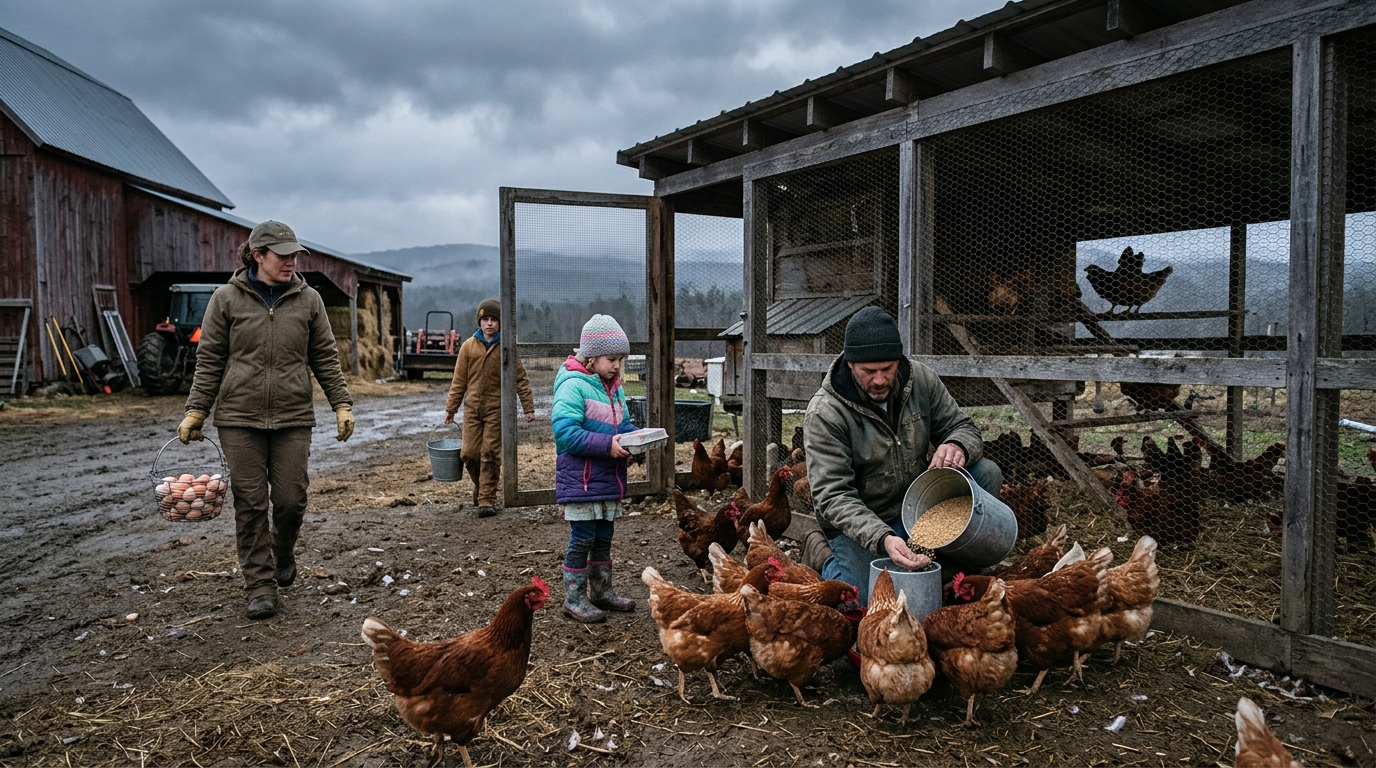
Agriculture researchers have documented feed waste rates of 20–30% in open-trough feeding setups, driven primarily by rainwater exposure, wild bird access, and rodent contamination. On a small farm, that figure represents real money leaving the operation every single week — quietly, and without a clear fix.
Sarah M., a poultry keeper in rural Tennessee managing a mixed flock of 12 hens, described the tipping point plainly: "It was never one bad day. It was the accumulation of knowing I couldn't be away from home without arranging for someone to cover the coop. That was the real cost."
The Engineering Response to a Logistics Problem
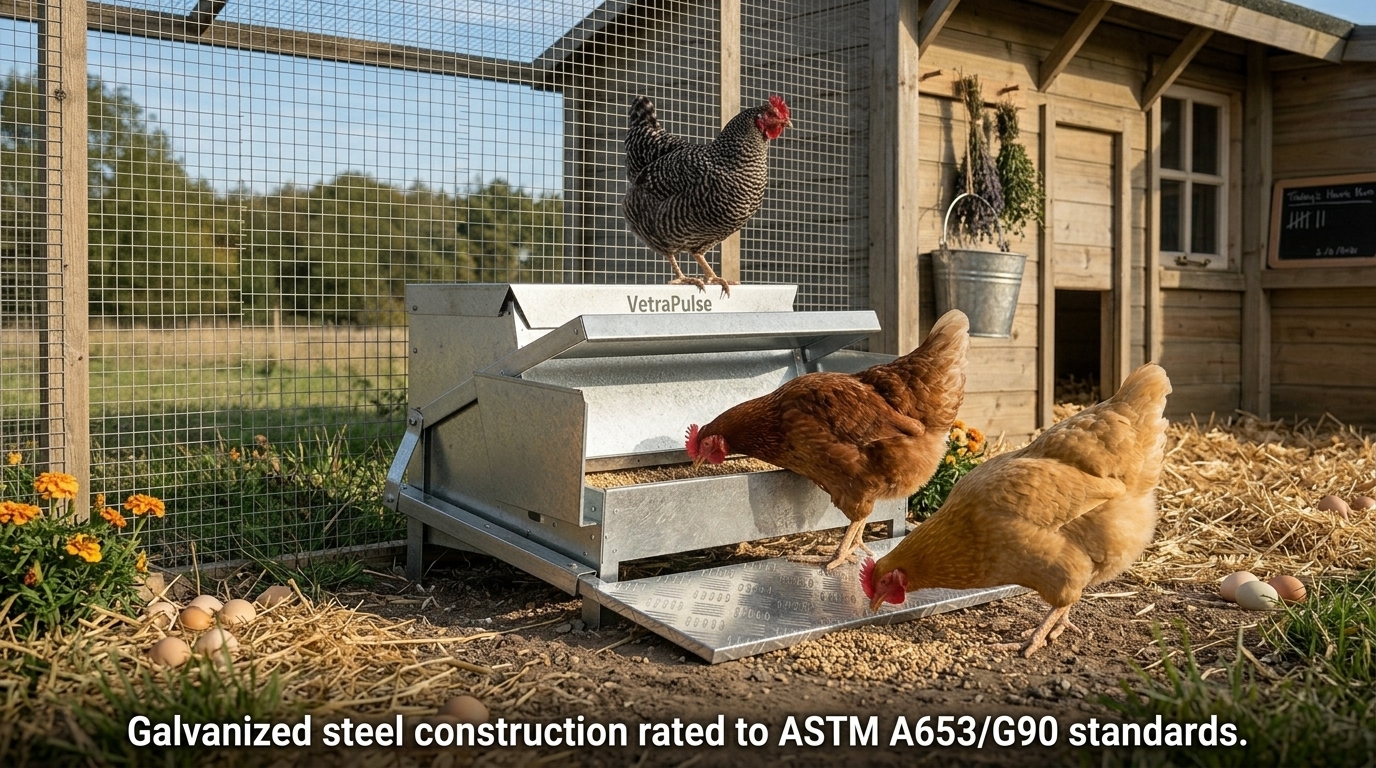
Equipment manufacturers have responded to this demand with a new generation of automatic feeders built specifically for outdoor, unattended operation. Among them, VetraPulse — a Seattle-based farm equipment brand — recently released a 25 lb galvanized steel feeder rated for up to 10 adult hens over a seven-day period.
The design choices reflect practical field conditions rather than retail shelf appeal. The unit is built from galvanized steel and aluminum alloy, certified to ASTM A653/G90 rust-resistance standards — a specification more commonly associated with fencing and structural agriculture components than feeding equipment. The sealed lid and enclosed feed chute address the two primary failure points of conventional feeders: moisture intrusion and open access for wild birds and rodents.
At a standard adult consumption rate of roughly a quarter pound per hen per day, a full 25 lb load covers 10 chickens for seven days without refilling. For the operator, that arithmetic translates to one weekly maintenance visit replacing fourteen daily ones.
Marcus D., a hobbyist farmer in Oregon balancing coop management with full-time employment, noted the operational difference after his first month: "I refill it on Sunday. By the following weekend it's ready for another fill. My hens are in better condition, there's less waste on the ground, and I'm no longer arranging my work travel around a feeding schedule."
What the Shift from Plastic to Galvanized Steel Actually Means
A detail that separates newer automatic feeders from their predecessors is material specification. Most entry-level feeders are manufactured from molded plastic — adequate for indoor use, but prone to UV degradation, cracking under freeze-thaw cycling, and structural failure within one to two outdoor seasons.
Galvanized steel behaves differently. The zinc-iron coating process that defines the ASTM A653 standard creates a corrosion barrier that maintains integrity across extended outdoor exposure. For a farmer making a purchasing decision, this distinction has direct implications for long-term cost: a steel feeder purchased once typically outlasts two or three plastic replacements.
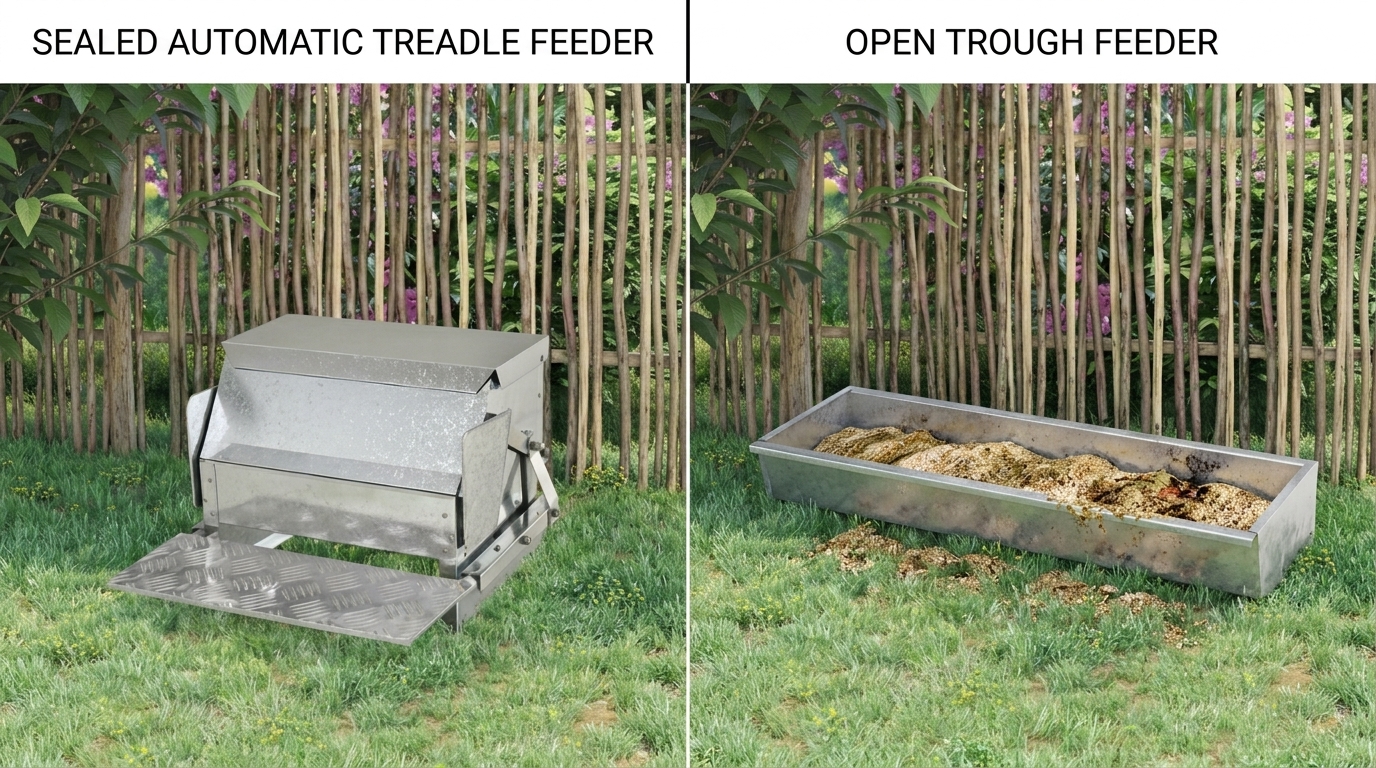
The no-waste chute design carries secondary benefits beyond feed conservation. Accumulated, accessible feed is a primary attractant for rodents and wild bird populations — both of which introduce disease risk to a confined flock. A feeder that dispenses only on demand removes that attractant from the coop environment.
A $74 Decision With Compounding Returns
The VetraPulse 25 lb feeder is priced at $74, with free standard shipping on orders above $30. For context, a 50 lb bag of quality layer feed runs approximately $20–$25. If sealed automatic feeding eliminates even 20% of feed waste across a year, the feeder pays for itself within a single season for a flock of 10 — before accounting for recovered time.
Explore further
| From Token Cost to Token Valu | Innoscience's current product |
| Digital Bridges, Shared Rhyth | iFLYTEK's Smart Hardware Now |